
 VIE
 EN
Circular Agriculture Models Help Optimize Production Costs
In the context of the agricultural industry facing many challenges such as rising input costs, increasingly depleted land and water resources, and increasingly stringent requirements for agricultural product quality, finding effective and sustainable production methods has become a critical issue. Instead of just focusing on increasing productivity by using more resources, modern agriculture is shifting towards solutions that optimize resources, reduce waste, and create value from by-products that were previously discarded. In this trend, circular agriculture models are considered a suitable development direction to help improve production efficiency, reduce operating costs, and create a more sustainable farming system. This is a production method based on the principle of reusing resources, utilizing waste during the production process to create raw materials for other activities within the same system. Unlike traditional agricultural models that often operate in a one-way direction—where raw materials are put into production and waste is discharged into the environment—circular agriculture aims to build a closed loop. By-products such as straw, livestock manure, crop residues, or organic wastewater can be processed and reused to create fertilizer, energy, or new nutrient sources. Applying this model not only helps reduce the cost of purchasing input materials but also enhances the farm's self-reliance. When resources are exploited efficiently, producers can reduce their dependence on chemical fertilizers, industrial feed, or external energy sources. Because of these benefits, circular agriculture models are increasingly attracting interest from many businesses, cooperatives, and large-scale farms. This is not only an economic solution but also an important step in building green, environmentally friendly, and long-term sustainable agriculture.
Concept and Operating Principles of Circular Agriculture Models
A circular agriculture model is a production method in which inputs, production processes, and outputs are linked to minimize resource waste. Instead of viewing waste as a problem that needs to be disposed of, this model considers it a resource that can continue to be exploited to create new value. The basic principle of circular agriculture is based on reusing, recycling, and regenerating resources within the production system. For example, in a farm combining cultivation and livestock, waste from livestock can be processed into organic fertilizer for crops.
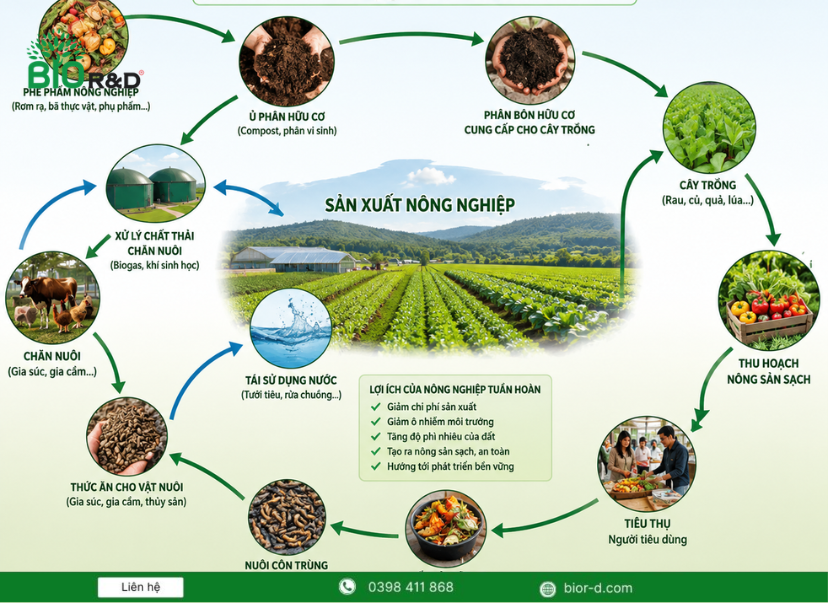
Conversely, crop by-products can be utilized as feed for livestock or raw materials for bioenergy production. The distinctive feature of this model is the connection between many different production activities rather than separating each individual sector. A farm can combine planting, livestock rearing, aquaculture, waste treatment, and fertilizer production within the same system. Thanks to this linkage, the amount of wasted resources is significantly reduced. At the same time, businesses and producers can better control operating costs, improve economic efficiency, and reduce negative impacts on the environment.
>>> You may be interested in: The Role of Beneficial Microbial Systems in Modern Agricultural Production
Benefits of Circular Agriculture Models in Optimizing Production Costs
One of the greatest advantages of circular agriculture models is the ability to significantly reduce production costs by maximizing the use of available resources. When by-products are reused efficiently, producers do not need to rely too heavily on external sources.
- Reduce fertilizer costs by utilizing organic waste to create natural nutrient sources for crops.
- Limit waste treatment costs by turning production by-products into valuable raw materials.
- Save water resources by applying water reuse and recycling systems in production.
- Reduce dependence on external energy by utilizing biogas from livestock waste.
- Increase land use efficiency by combining multiple production activities within the same system.
- Increase profits by creating more products from the same initial source of resources.
These benefits make circular agriculture a suitable solution in the context of rising agricultural production costs. Instead of constantly investing in more resources, producers can efficiently exploit what they already have to create new value.
Popular Circular Agriculture Models Today
Currently, circular agriculture models are implemented in many different forms depending on production conditions, farm scale, and regional characteristics. Each model aims for the common goal of reducing waste, increasing resource reuse, and improving economic efficiency. One of the most popular models is the combination of cultivation and livestock. In this model, livestock waste is processed into organic fertilizer for crops, while crop by-products are utilized as feed for livestock.
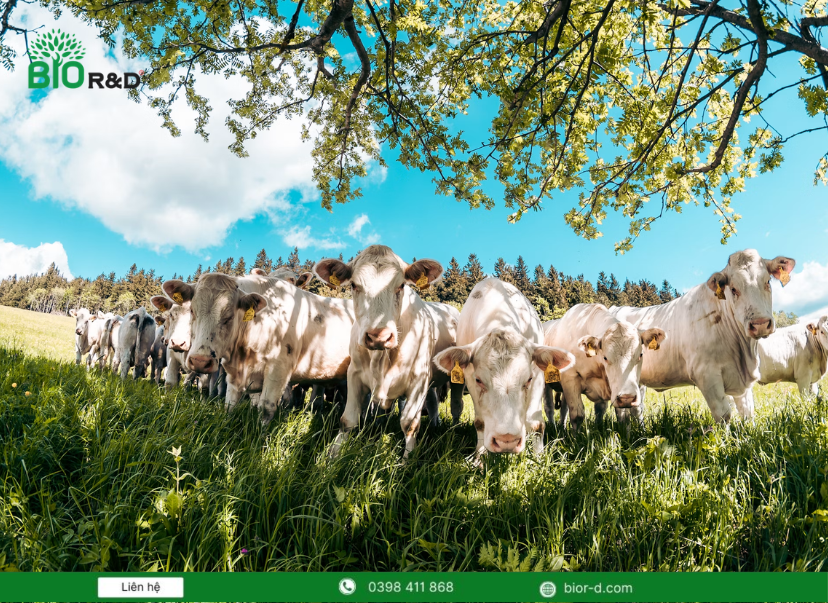
Additionally, the traditional VAC (Garden-Pond-Cage) model is also an effective form of circular production when combining gardening, aquaculture, and animal husbandry. Livestock waste can supplement nutrients for fish ponds or gardens, forming a linked production chain. Furthermore, modern farms also apply circular models combined with technology such as biogas treatment systems, irrigation water reuse, microbial organic fertilizer production, and production data management using digital technology. These models are contributing to changing the approach in agricultural production, from exploiting resources to managing and regenerating resources.
Application of Technology in Developing Modern Circular Agriculture Models
Technology plays an important role in improving the efficiency of circular agriculture models. Thanks to scientific and technical advancements, farms today can better control the production process, waste treatment, and resource reuse.
- Biological waste treatment technology helps convert by-products into fertilizer or clean energy sources.
- Smart sensor systems support monitoring soil, water, and crop growth conditions.
- Microbial organic fertilizer production technology helps improve nutritional quality for crops.
- Recirculating irrigation systems help reduce water consumption and optimize resource usage efficiency.
- Farm management software helps control costs, output, and efficiency of each production activity.
- Traceability technology helps increase product value and build trust with consumers.
Combining technology with circular principles helps farms not only reduce costs but also improve competitiveness in the market.
Role of Circular Agriculture Models in Environmental Protection
Besides economic benefits, circular agriculture also brings many important values regarding the environment. This is one of the solutions that helps reduce pressure on natural resources and limit negative impacts from production activities. In traditional farming methods, a large amount of by-products is often discarded or handled improperly, causing soil, water, and air pollution. When applying the circular model, these waste sources are reused to create new products.
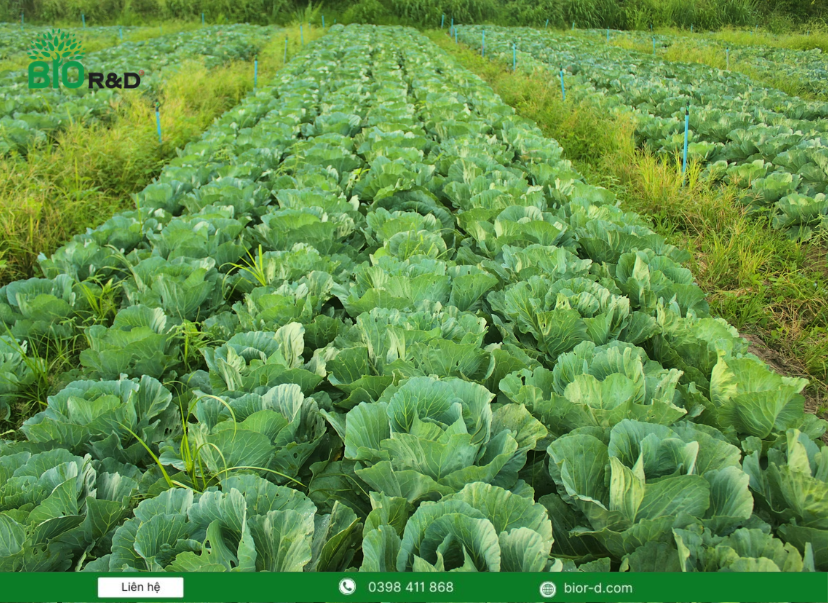
For example, livestock waste can be treated with biogas systems to generate energy for domestic use or production. Agricultural by-products can become raw materials for compost or livestock feed. As a result, the amount of waste released into the environment is reduced, and the production ecosystem is maintained in a more balanced state. This is an important factor helping the agricultural sector adapt to current green development requirements.
Factors Necessary to Build an Effective Circular Agriculture Model
To successfully implement a circular agriculture model, producers need to have a suitable plan based on the actual conditions of each farm. Applying this model is not simply utilizing waste but requires building a production system with tight linkages.
- Clearly identify resources that can be reused in the agricultural production process.
- Design a production system suitable for the scale and natural conditions of each region.
- Invest in by-product treatment technology to ensure efficiency and environmental safety.
- Train human resources with knowledge of circular system operating processes.
- Control output product quality to ensure long-term commercial value.
- Build a cost management plan to optimize the economic efficiency of the model.
When these factors are ensured, the circular agriculture model can maximize its efficiency and become a foundation for sustainable development.
Challenges when Implementing Circular Agriculture Models
Although bringing many benefits, the process of developing circular agriculture still has some difficulties that need to be resolved. One of the biggest challenges is the initial investment cost for treatment systems, technology, and infrastructure. Besides that, many small-scale producers still do not have enough knowledge or resources to convert to the new model.
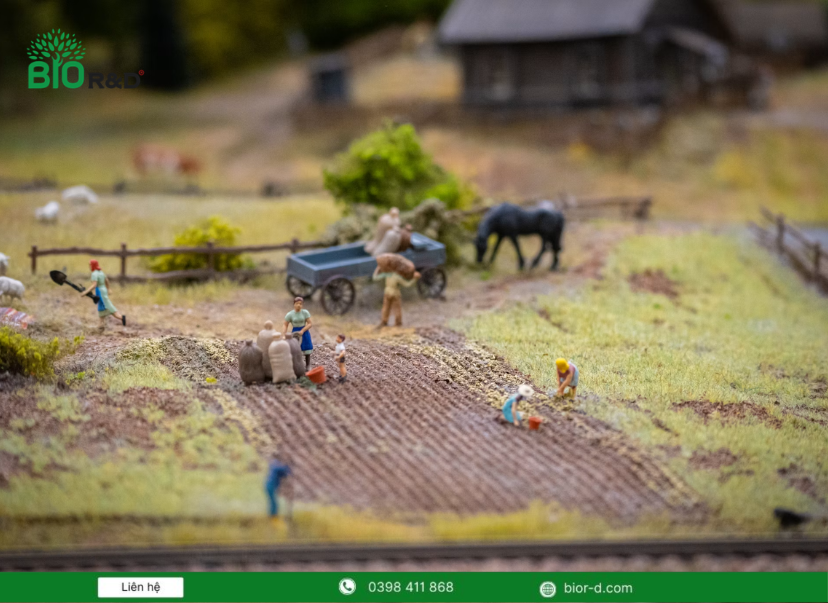
Changing traditional production habits also requires time and support from professional organizations. In addition, for the model to operate effectively, there needs to be a linkage between many parties such as producers, businesses, scientists, and management agencies. This coordination helps create a complete value chain and ensures stable output for products. However, with the current green agricultural development trend, these difficulties are gradually being overcome through the application of technology and appropriate support policies.
Conclusion:
In the context of the agricultural industry needing to optimize costs, reduce environmental impact, and improve product value, circular agriculture models are becoming an important development direction. Not only helping to utilize resources efficiently, this model also supports reducing input costs, limiting waste, and creating production systems capable of self-maintenance over a long period. The combination of modern technology, scientific management methods, and circular production thinking will help businesses and farmers improve economic efficiency while meeting the increasingly developing green consumption trend. In the future, circular agriculture will not only be an alternative solution but may become an important standard in the process of building modern, sustainable, and environmentally friendly agriculture.
Contact Information
BIO R&D COMPANY LIMITED

- Office: 83 Xo Viet Nghe Tinh, Ward 7, Da Lat City, Lam Dong Province
- Farm: Thanh Ha Hamlet, Phi To Commune, Lam Ha District, Lam Dong Province
- Hotline: 0398 411 868 - 0983 276 527
- Website: bior-d.com
- Email: biogap.org@gmail.com


